The grand Samatha Kumbh celebrations officially commenced on the morning of January 30, 2026, marking the annual varshikotsavam (anniversary) of the Samatha Murthy (Statue of Equality). The timeline of the festival is defined by the stars: it begins on the Ardra Nakshatram (the birth star of Bhagavad Ramanujacharya, who was born 1,008 years ago) and concludes on the Chitta Nakshatram of Divya Saketa Rama.
Morning Rituals & Golden Ramanuja Abhisekham
Mass Ritual Bathing: The celebratory prelude began with a holy bath (Abhisekham) performed for the Perumal of all 108 Divya Desams, Divya Saketa Rama, and the personal Perumal deity of HH Sri Chinnajeeyar Swamiji.
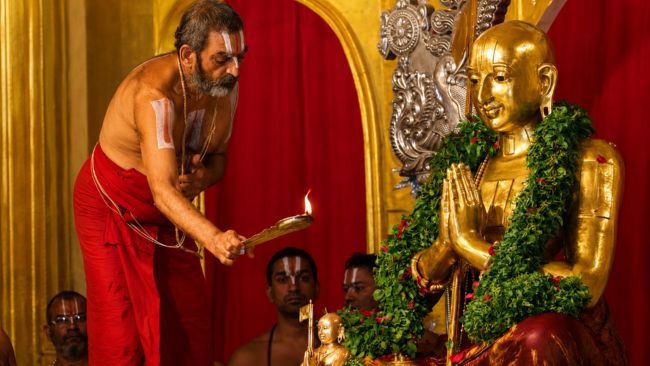
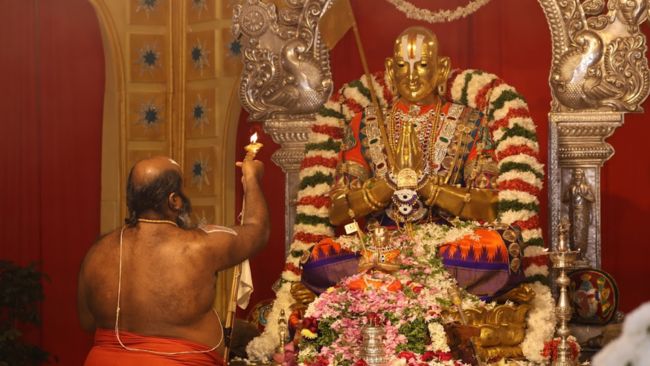
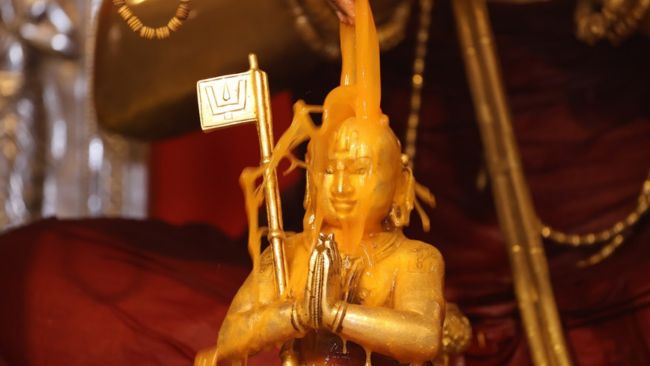
Ardra Abhisekham: Because the day coincided with the Ardra Nakshatram, a special Abhisekham was performed for the Golden Ramanuja statue inside the Statue of Equality premises, under the direct supervision of Sri Swamiji.
Discourse by Sri Swamiji: On this occasion, Sri Swamiji delivered a discourse highlighting the significance of the Ardra Tirunakshatram and outlined the schedule of special events lined up for the 9-to-10-day festival.
Evening Events & Assignments
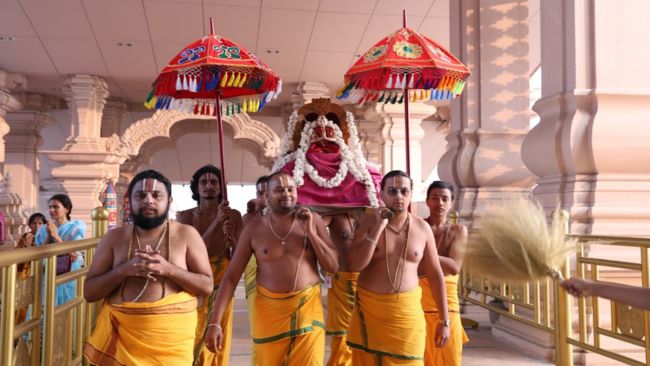
Procession: In the evening, Sri Viswaksena went around the venue on a palanquin to inspect the festival preparations.
Vedic Recitations & Appointments: Students of Vedic studies devotedly recited the four Vedas. Eminent scholars were assigned core roles for the rituals:
Brahma: Dr. Rangaramanujacharya Swami.
Yagnacharyas: Samudrala Srinivasacharya Swami, Mudumba Madhusudhanacharya Swami, Sri Raghudatta Swami (Chief Priest of the 108 Divya Desams), and Naveen Swami.
Simultaneous Brahmotsavams: A major decision was made by the elders to simultaneously organize the Brahmotsavams of Divya Saketa Rama and the Perumal of all 108 Divya Desams from this year onward.
Conclusion: Prayers were offered to the Garudapatams (Garuda flags), and Rakshasutras (sacred protective threads) were tied to the Ubhayadars (patrons/sponsors). The first day concluded at 5:00 PM with a collective recital of the Sri Vishnu Sahasranamam, followed by Mangalasasanams and Sattumurai.