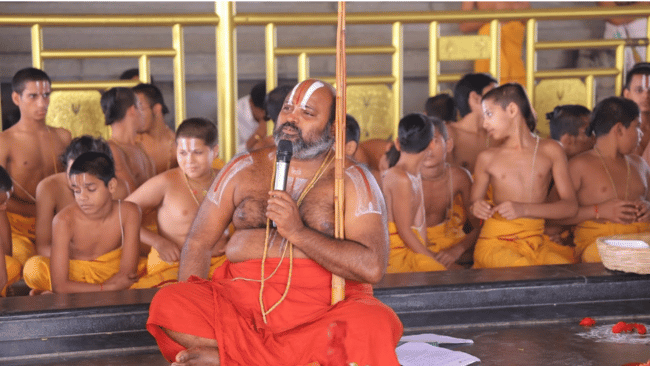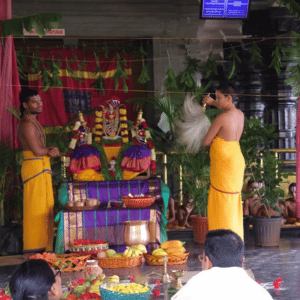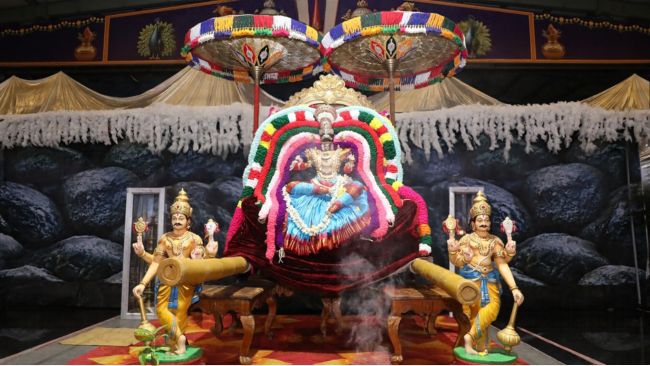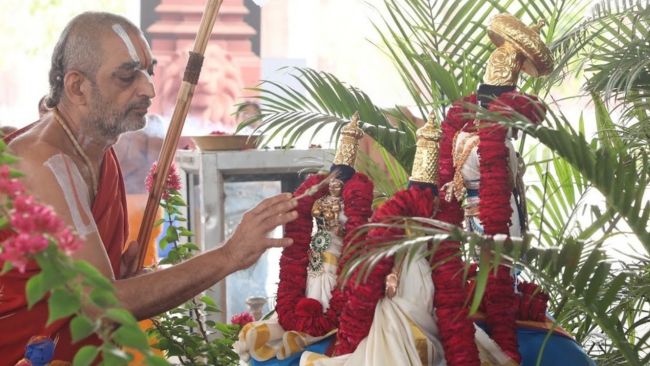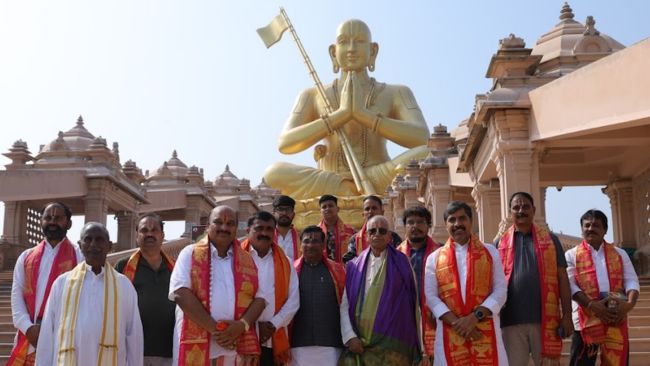
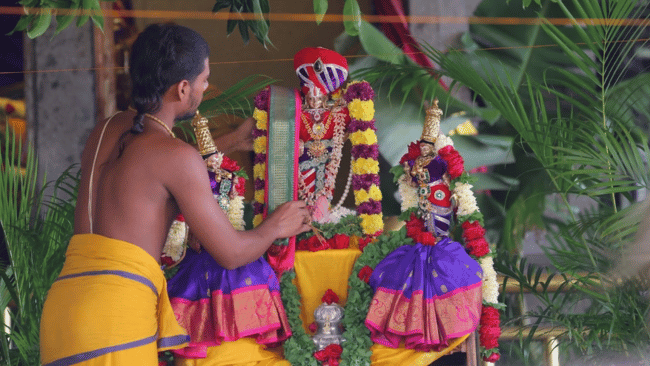
On the auspicious occasion of Anantha Chaturdasi, September 25, 2026, which falls on Bhadrapada Sukla Chaturdasi, Anantha Padmanabha Vratam was performed at Statue of Equality in the gracious presence of HH Chinna Jeeyar Swamiji. Several devotees participated in the sacred Vratham.
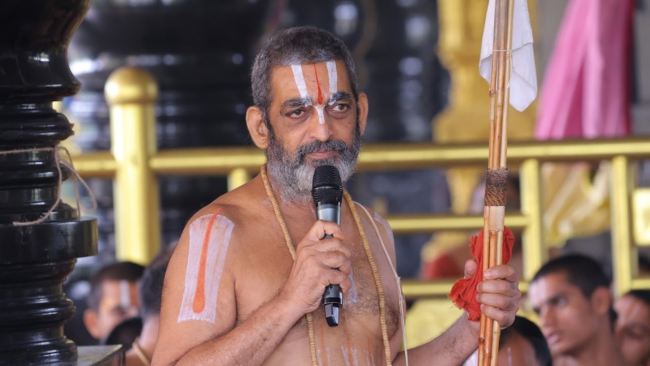
In his discourse on the occasion, Sri Swami explained that the Lord gives darshan in 108 glorious forms at Statue of Equality. Each Divya Desam here is connected with its corresponding original Divya Desam. A small quantity of soil from the original Divya Desam, along with a Saligramam that had been receiving aradhana in that Divya Desam since many years, was brought and placed in the corresponding Divya Desam at Statue of Equality. Thus, there is a sacred spiritual connection between each Divya Desam here and the original Divya Desam it represents.
Of the 13 Divya Desams in the Kerala (Malanadu) region, the Anantha Padmanabha Swami Divya Desam is particularly prominent. Sri Swami recalled that the Alwars referred to the Deity of this Divya desam as Kesava in their devotional hymns. They extolled the glory of chanting the name “Kesava,” saying that even uttering the name once would remove one’s kleshas and difficulties. They also sang of the extraordinary sanctity of the Divya Desam, declaring that even the act of wiping the dust from its premises could destroy the sins accumulated over previous births, however grave they might be.
Sri Swami therefore advised devotees to dedicate some of their time to cleaning the premises of at least one such Divya Desam and thereby make their lives blessed and more meaningful through such service.
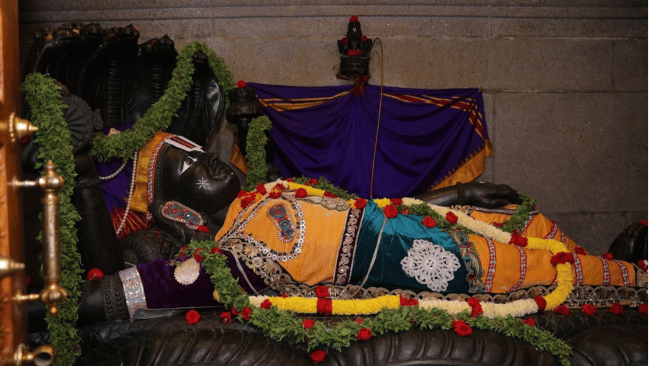
Sri Swami also spoke about the spiritual significance of the Anantha Padmanabha Swami Divya Desam in Thiruvananthapuram. He referred to the well-known incident concerning the seven chambers of the Divya desam, which had remained closed over decades. Despite several attempts , only six chambers could be opened while the seventh remains unopened, to this day.
Sri Swami recalled that the ruling family of the erstwhile princely state of Travancore belonged to the lineage associated with Sri Kulasekhara Alwar, the composer of Mukunda Mala. The present-day heirs of this dynasty, who serve as trustees of the Divya Desam, are sincere devotees of the Lord. They have affirmed that the erstwhile Travancore kingdom (present Keralam) itself belongs to the Lord and that they have ruled the kingdom as His servants. This was even stated in an affidavit submitted before the Supreme Court.
Sri Swami compared this attitude to that of Bharata, who regarded the kingdom of Ayodhya, as well as himself, as belonging to Lord Rama. He exhorted devotees to cultivate a similar spirit by considering all their wealth and possessions as belonging to Bhagawan and themselves merely as His servants entrusted with their management.
Sri Ahobila Swamiji then narrated the story associated with the Anantha Padmanabha Vratham. In response to Yudhishthira’s query about the most beneficial Vratham, Lord Krishna narrated the story of a newly married couple, Sheela and Koundinya.
As time passed, Koundinya’s efforts began to bear fruit and he became prosperous in every respect. However, prosperity gradually made him arrogant. He eventually drove Sheela out of his home. As time passed, he lost his wealth and was reduced to poverty.
While wandering from place to place as a pauper, Koundinya remembered Anantha Padmanabha Swami and began searching for Him. During his journey through a forest, he encountered a mango tree laden with fruit, a lone bull and an elephant. He asked each of them whether they knew where he could find Anantha Padmanabha Swami, but none could provide an answer.