The Grandeur and Significance of Saran Navaratri
Sarannavarathrulu is an incredibly overwhelming emotion. It’s a remarkable celebration with decorative garniture and special offerings to honour the deities. Normally, Sarannavaratri falls on Prathipada (Padyami) tithi in the bright lunar fortnight of Ashwayuja month. In 2026, Navaratri observance spans 9 days, starting from 11th October to 20th October.
Goddess Lakshmi: The Embodiment of Wealth and Prosperity
Everyone loves Laxmi Devi because she is the goddess of wealth and prosperity. It is an established fact that she is also the goddess of good fortune. Laxmi Devi’s abundant grace brings money into homes, and devotees don’t face financial troubles. She symbolises purity and honesty. Hence, in Vaishnava tradition, during Sarannavaratri Mahotsavam, devotees worship Goddess Laxmi Devi for nine days by reciting Laxmi Ashtothram. Ashtothara Sahasranamavali, Srisuktham, etc., and perform pujas like Sri Yagam, Laxmi Kumkumarchana, etc.
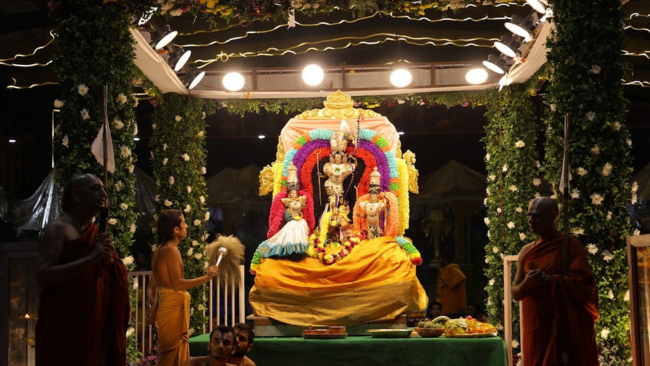
The Supreme God, Lord Vishnu, grants wishes if we have Laxmi Devi’s grace. So, reaching Him through the goddess is the best way. This is called ‘Sri Sampradayam’. Therefore, devotees need deep devotion to please the goddess. In association with SaranNavaratri Mohotsavam, worship of 8 forms of Shodasa Laxmi has been held for 9 nights. The worship includes sacred rituals like thirumanjanam, thiruvaradhana, mangalasasanams, holy offerings, homam, yagam, etc. The ashta laxmi devis receiving the worship are Maha Laxmi, Veera Laxmi, Dhana Laxmi, Santana Laxmi, Jaya Laxmi, Dhanya Laxmi, Vidya Laxmi, Dhairya Laxmi, and Rajya Laxmi. Ultimately, Shami Puja is performed on the day of Dusserah.
Navaratri Worship
Day 1 – Sri Maha Lakshmi Alankaram | 11th October
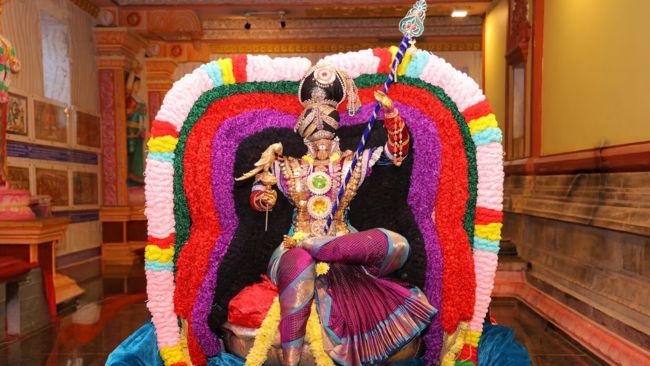
On the first day, 11th October, Laxmi Devi was in Sri Maha Laxmi’s makeover. The common wish behind praying to Maha Laxmi is for harvest and prosperity. In the morning, Thirumanjana Seva and Sri Yagam were performed subsequently for prosperity and blessings. The divine countenance of Maha Laxmi Devi in blue attire, with a slightly slid-out left leg, must be seen for divine vision. In the evening, after offering thirumanjana seva and Archana to Sri Maha Laxmi Devi, a play is enacted denoting the glory of Sri Ramanujacharya. Maha Laxmi Devi was prayed on the first day; it informs of her proximity to the Matsya and Kurma incarnations of Lord Vishnu. Lord Vishnu saved the foremost Vedic knowledge in the Matsya Avatar and became the core support during cosmic ocean churning in the Kurma Avatar.
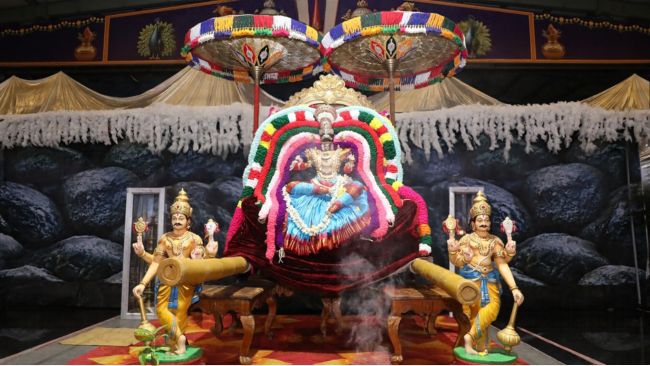
Day 2 – Veera Lakshmi Alankaram | 12th October
On the 2nd day, 12 October, Laxmi Devi was in Veera Laxmi Alankaram. She serves as the undeniable goddess of valour. Devotees pray to her for physical strength and courage. She is the goddess of external valour to encounter enemies and succeed in threats. Devotees offer a sacred fire ritual, Sudarsana Ishti, for overall protection, victory, and spiritual growth. Veera Laxmi is closely associated with Lord Vishnu’s incarnation of Narasimha, in half-man and half-lion form. He killed the demon Hiranyakashipu in his lap with his immeasurable lion strength.
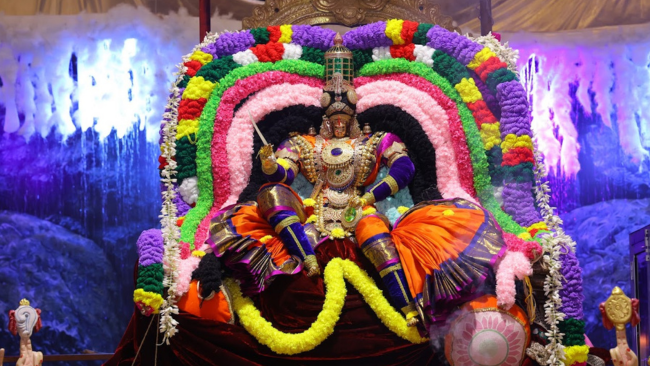
Day 3 – Dhana Lakshmi Alankaram | 13th October
On 13th October, the third day of Navaratri, Laxmi Devi was in Dhana Laxmi’s attire. Alongside the sacred ritual, acharyas offered Laksha Kumkumarchana for growth in wealth and prosperity. Dhana Laxmi Devi not only represents movable and immovable properties but also represents spiritual treasure. Dhana Laxmi is related to the Kalki Avatar of the Dasavatars to restore material and spiritual wealth to return home.
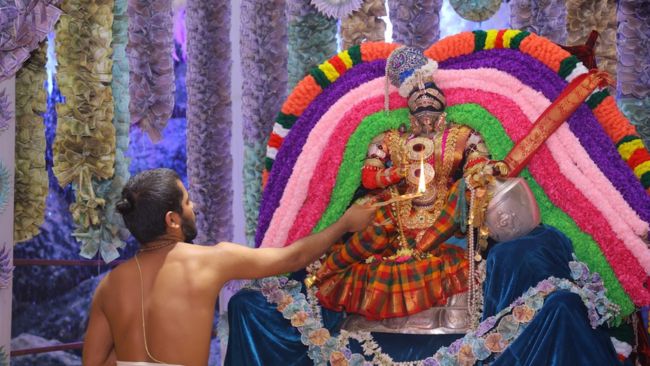
Day 4 – Santana Lakshmi Alankaram | 14th October
The fourth day is on 14th October. Laxmi Devi was bedecked in the Santana Laxmi form. Couples who aspire to have children participate in Putrakamyeshti yagam to get divine blessings for good children. May the goddess bless them with the best offspring. Parasurama Avatar, the master of martial arts, is the related incarnation of Santana Laxmi, as he is an obedient son and respects filial duties.
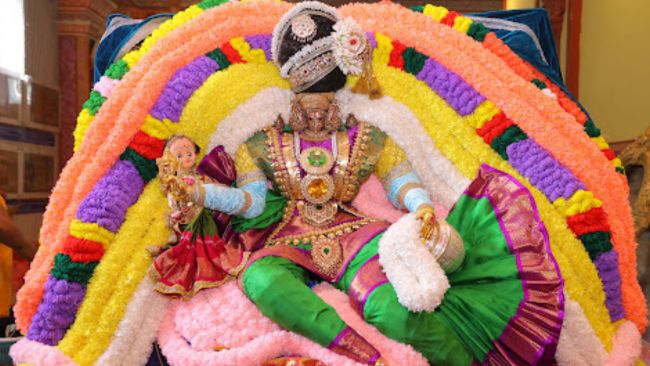
Day 5 – Jaya Lakshmi Alankaram | 15th October
On 15th October, the fifth day, divine Laxmi Devi appeared in Jaya Laxmi fashion with splendid jewellery. She is the goddess of success and righteousness. On this day, those who had land disputes offered Laxmi Devi Archana and Bhu Varaha Ishti and kept their documents at Yajna for victory and resolution in property-related legal issues. Lord Rama is one of the incarnations of Lord Vishnu. The Rama incarnation is connected to the Jaya Laxmi form. It’s a great victory that Lord Rama won the war over Ravana on Vijaya Dasami Day.
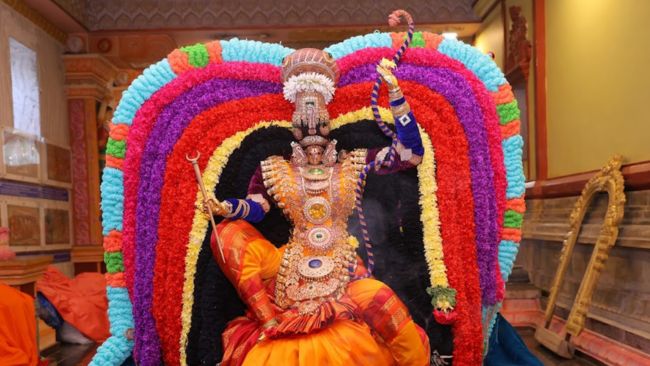
Day 6 – Dhanya Lakshmi Alankaram | 16th October
On the 16th October, the sixth day of Navaratri, Laxmi Devi adorned the elegance of Dhanya Laxmi. It is important to show respect and bow in front of Dhanya Laxmi, as she nourishes and sustains us always. To please Dhanya Laxmi, one should chant “O Nitya Pushta Namaha”. She was given esteemed veneration with Laksha Pushparchana for her grace, as it brings prosperity, health, and well-being. In the Varaha incarnation, Lord Vishnu saved the Earth from the Hiranyaksha demon. Thanks to him, agriculture survived and was able to keep going well.
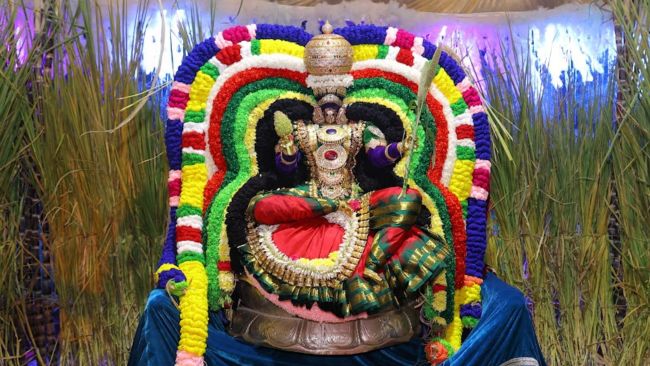
Day 7 – Vidya Lakshmi Alankaram | 17th October
On the seventh day, 17th October, Laxmidevi was adorned in Vidya Laxmi dress-up, and devotees offered Hayagriva Ishti for excellence in education. Hayagriva is one of the avatars of Lord Vishnu with a horse’s head. Goddess Saraswathi worshipped him for celestial and mundane knowledge; hence, he is the provider of knowledge, education, and learning. Devotees keep their books near Goddess Saraswathi for her blessing. Vidya Laxmi is the representation of Lord Krishna and Balarama. The peerless teacher, Lord Krishna, proclaimed the Bhagavad Gita, the exquisite and admirable book of knowledge and wisdom.
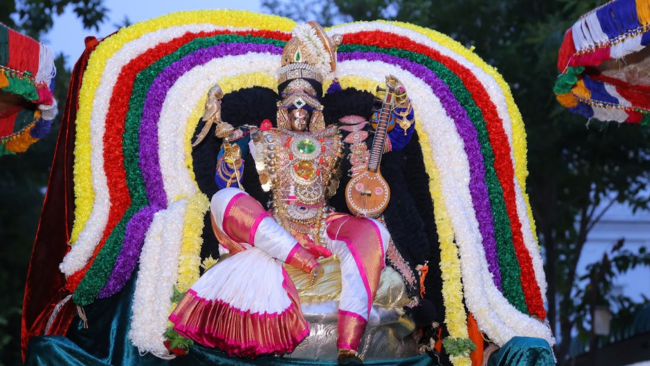
Day 8 – Dhairya Lakshmi Alankaram | 18th October
The eighth day is Ashtami tithi, on 18 October. Ashtami is a special tithi; when someone wants to please Goddess Laxmi Devi, Pancha Mahaparvas are best. They are Ashtami, Navami, Chaturdasi, Amavasya, and Pournami. During Ashtami tithi, Laxmi Devi was in the Dhairya Laxmi form. She strengthens inner fortitude, develops fearlessness, and removes mental issues. Devotees performed Narasimha Ishti in the morning to remove planetary afflictions. The Narasimha Avatar is Lord Vishnu’s incarnation related to Dhairya Laxmi. Lord Narasimha symbolises savagery and ultimate protection. Contemplation of Lord Narasimha aids in abolishing fears and phobias and protects us from menace.
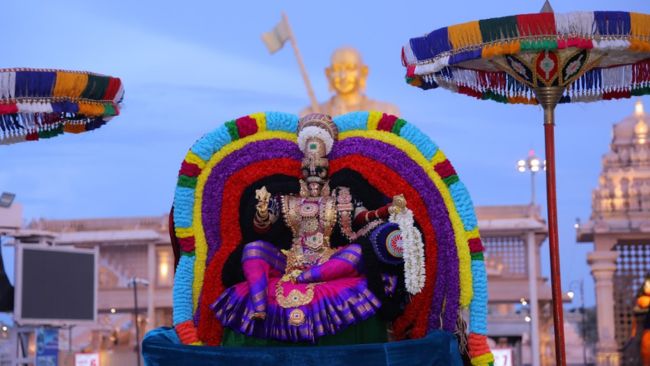
Day 9 – Rajya Lakshmi Alankaram | 19th October
During Navami tithi, the 19th of October, Laxmi Devi appeared in Rajya Laxmi adornment. Vishwaksena Ishti was offered during the day for success in all endeavours. On this day, tools like pens, computers, vehicle parts, weapons, etc., are placed in Ayudha Puja for success and betterment in daily activities. Rajya Laxmi helps in the restoration of lost kingdoms. She represents the Vamana Avatar of Lord Vishnu, who looks like a dwarf Brahmin. He retrieved 3 worlds for the Devas and brought back the cosmic power.
Shami Puja
Vijaya Dasami Celebrations | 20th October
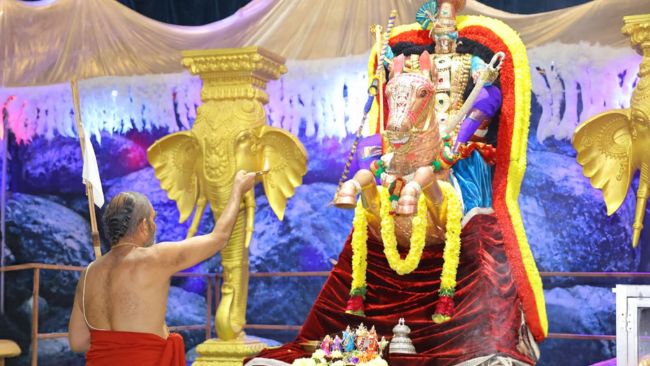
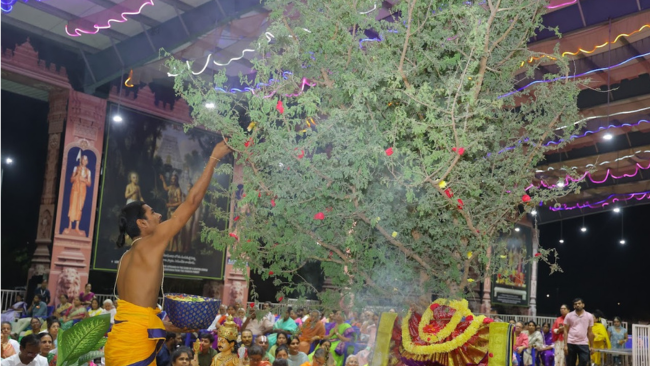
Dasami tithi, on 20th October, is the Vijaya Dasami festival. During Sravana nakshatram, in the afternoon, Aparajitha puja is offered to Perumal. In the evening, the Divya Saketham staff carried out 108 Kalasa Abhishekams for Perumal and Shami Puja. Shami puja should be done in the Ashwajyuja month, Shukla Paksha, in the evening with dasami tithi. Shami puja starts with Vishwakasena puja and punya vachanam when the stars come into the sky. Archaka Swamulu performed Shami Puja on behalf of the Perumal. The Perumal himself prays to his weapons and wears them. Sarannavarathrulu celebrations are completed with Shami Puja. Later, the next day, Sudda Dasami, the god, comes out on Ashwa Vahanam for Vijaya Yatra. Before the yatra, God performs Shami puja. Devotees write Shami sloka on paper and tie them to the Shami tree. Finally, the Shami puja ends with the distribution of Shami leaves to devotees. Devotees say they are Sona and Chandi, and they keep the leaves in their lockers with a belief to improve the wealth. Younger ones share the leaves with elders and take blessings.
Sarannavaratri Vratalu
The Significance of Observing Vratalu
During Sarannavaratri, in one of his speeches, Chinna Jeeyaru Swamivaru explained two types of vratams. One vratam starts with Kalasa Sthapana on Sapthami Day with the observance of fasting. The fasting continues through Ashtami and Navami tithis and is completed during Sravana nakshatra with Vudwasana. Then, it should be followed by a parayanam, like a Dwadasi-day parayanam, after Ekadasi fasting. Another vratham is offering an Aparajitha puja in the afternoon before completing the Sravana nakshatra and concluding it. Also, some devotees observe fasting during Moola and Sravana nakshatra tithis.
The Spiritual Significance of Sarannavarathrulu
Sarannavarathrula Araadhana will start with praying to the goddess. Ashtalaxmis are worshipped for eight days. Pancharatra Aagama texts reveal that Navaratri starts with Kalasaradhana and ends with Poornahuthi on the afternoon of Navami day. The ninth day is Ayudha Puja, and on the 10th day, Vijaya Dasami Shami Puja. All these are a good combination of enjoyment for Dusserah. Sarannavarathrulu allows us to enjoy nature’s beauty, so this is a time to say thanks to the environment. It conveys the message to be together without any anger or excitement. Life should be led with enjoyment and togetherness in association with nature, but not in a way that brings harm to the race and nation.
Devotion, Prosperity, and Harmony
Being humans, we need property, children, money, and energy, etc., to live in this world. So, we believe in God, who is the provider of all, and pray for his grace. So we trust that God’s blessing embodiment is Ammavaru, the Laxmi Devi. Sarannavarathrulu is an excellent period to commit to hard work to achieve success. Eight forms of prayers to Laxmi Devi for nine nights bring her grace and abundance in eight ways. Prayers to Laxmi Devi fulfil our desires and spread harmony around us.
BY
Smt Prabha Shini